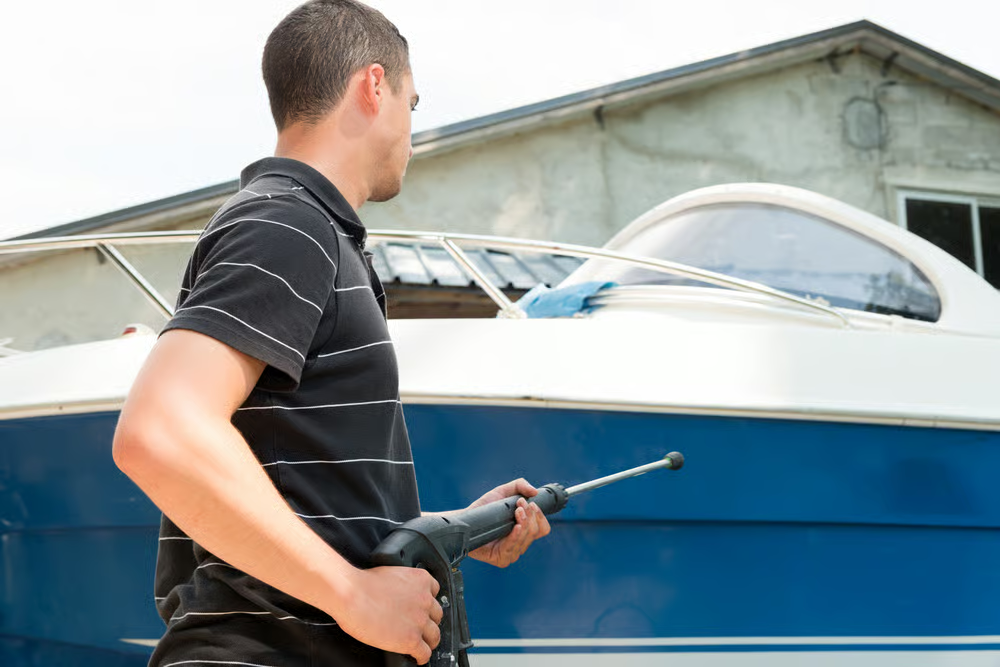
The marine environment puts fiberglass through a unique set of stresses that land-based applications simply don't face. Constant water immersion, UV exposure, temperature cycling, impact from waves and debris, and the corrosive effects of saltwater all work together to degrade a hull over time. Understanding these mechanisms — and what to check for at each stage — can make a significant difference in how long a fiberglass boat holds up and how manageable the maintenance stays.
How the Marine Environment Differs
On a boat, the underwater portion of the hull spends its entire working life submerged. That's a fundamentally different situation from, say, an RV body that gets rained on or an automotive panel that occasionally contacts moisture. Prolonged immersion means that any permeability in the laminate is amplified over time, and there's far less opportunity for moisture to dry out between exposures. The challenge is compounded if the boat operates in salt water, which increases the osmotic driving force that draws moisture into the laminate.
Above the waterline, UV exposure is often more intense on the water than it is on land — reflections off the water surface effectively double the UV load on horizontal surfaces like decks and cabin tops. The sun also dries the gelcoat rapidly after wet periods, which accelerates the oxidation and micro-cracking that cause the surface to dull and chalk.
Osmotic Blistering: What It Is and Why It Matters
Osmotic blistering is one of the most discussed topics in fiberglass boat maintenance, and for good reason. The basic mechanism is straightforward: water molecules permeate through the gelcoat and into the laminate, where they encounter water-soluble compounds — residual styrene, catalyst byproducts, and other chemicals that weren't fully cured out or are present in the resin. These compounds dissolve into the water, creating a fluid with a higher solute concentration than the surrounding water. Osmotic pressure then drives more water inward to equalize the concentration, and the resulting fluid pocket creates the blister you see on the hull surface.
The severity varies widely. Some boats develop a few minor blisters over many years and those never progress to anything more serious. Others develop extensive blistering that, if left unaddressed for long enough, allows the fluid to degrade the resin-to-glass bond in the laminate, leading to actual structural weakening. A boat with significant blistering that's been sitting without attention for several seasons can have a laminate that sounds hollow when tapped, indicating widespread delamination.
The Blister Repair Process
Addressing osmotic blistering properly involves more than just filling the voids. The standard approach is to haul the boat out of the water, open all blisters, clean out the fluid, and allow the hull to dry thoroughly — which can take weeks or months depending on the severity and the ambient conditions. Attempting to apply filler or barrier coat to a wet laminate is a common mistake that leads to rapid re-blistering.
Once dry, the opened areas are filled with epoxy fairing compound, built back up to fair with the hull, and then a barrier coat (typically multiple layers of high-build epoxy primer) is applied over the entire bottom before antifouling paint goes back on. Epoxy barrier coat doesn't make the hull impermeable, but it significantly reduces the rate of water ingress and extends the time before blisters redevelop.
Saltwater Effects on Fiberglass and Hardware
Salt doesn't react with fiberglass itself, but it accelerates corrosion of any metal hardware that penetrates or sits against the hull, and the resulting corrosion can create pathways for water entry at fittings, through-hulls, and hardware mounting points. These points of entry are frequently the starting location for more serious laminate damage.
Additionally, salt deposits left on topsides and deck gelcoat as the water evaporates are mildly abrasive and can trap moisture against the surface. Regular rinsing with fresh water after sailing in salt water isn't just cosmetic — it reduces the abrasive and corrosive effects on the gelcoat and extends the time between surface treatments.
Gelcoat on Topsides and Deck Surfaces
The above-waterline portions of a fiberglass boat age differently from the bottom. UV is typically the dominant factor, causing oxidation that manifests as a chalky or dull surface, and thermal cycling — hot summer sun followed by cool nights — causes the gelcoat to expand and contract, which eventually leads to fine crazing or spider-web cracking.
Regular compounding and waxing slows this process considerably. A good compound removes the oxidized surface layer and restores gloss; wax provides a temporary sacrificial layer that takes the UV and abrasive wear before the gelcoat does. On a boat used regularly, annual compounding and waxing is a reasonable maintenance interval. For boats stored outdoors year-round, twice a year may be needed in high-UV climates.
When Gelcoat Needs More Than Buffing
Eventually, compounding no longer brings back the gloss because the gelcoat layer itself has thinned or the crazing has become too extensive. At this point, the options are repainting with a topside paint (which is easier to apply in large areas but may not have the hardness and gloss retention of gelcoat) or applying fresh gelcoat, which requires a higher level of application skill but produces a more durable and authentic-looking result. Color matching aged gelcoat is one of the more challenging aspects of boat refinishing, as the original color has usually shifted significantly.
Impact Damage on Marine Vessels
Impact damage on fiberglass boats commonly occurs at the bow (from spray and debris), along the waterline (from dock contact or floating debris), and at the transom (from engine vibration and backing into things). The repair approach depends heavily on where the damage is and how deep it goes.
Waterline and transom damage are particularly important to address promptly because both areas are frequently immersed. Water entering an unrepaired crack or chip accelerates the degradation dramatically, and damage in these locations is also more likely to be near through-hull fittings and structural features where integrity matters most.
A Practical Seasonal Maintenance Approach
Haulout Inspection
Any haul — whether for the winter or for bottom paint — is a good opportunity to do a thorough inspection. Walk the entire hull looking for blisters, cracks, chips, impact marks, and any areas where the antifouling looks abnormal (pimpling or raised spots can indicate blistering under the paint). Pay particular attention to the keel-to-hull joint, through-hull fittings, and the waterline band.
Spring Launch Checklist
Before launching each season, check the topsides for any new crazing or stress cracks that may have developed over the winter (freeze-thaw cycles can open up existing micro-cracks), inspect all deck hardware mounting points for any signs of water intrusion or softness in the deck, and ensure all hatches and portlights seal properly. Small issues caught in the yard are far easier and cheaper to address than the same issues after they've been immersed for a season.
In-Season Checks
During the season, pay attention to anything unusual: a dull thud instead of a solid sound when rapping on a hull section (potentially indicating delamination), water in the bilge that can't be accounted for by rain or spray, or soft spots in the deck (often from water infiltrating through deck hardware and saturating core material). None of these necessarily require immediate hauling, but they're worth noting and addressing before the next haul.
When DIY Makes Sense and When It Doesn't
Compounding and waxing, minor gelcoat touch-up, and bottom paint application are all reasonable owner-performed maintenance tasks on fiberglass boats. Structural crack repair, blister remediation, and any repair involving the laminate below the gelcoat layer is a different category. These jobs require the right materials, proper surface preparation, and enough experience to know when a repair is solid versus when it's just cosmetic. A visually clean repair on a structural crack that hasn't been properly ground out and reinforced can give a false sense of security while the damage continues to develop underneath.
Questions about your boat's hull?
If you've noticed blistering, cracking, or impact damage on your fiberglass hull, we're happy to discuss what you're seeing and help you figure out the right next step.
Contact Our Team