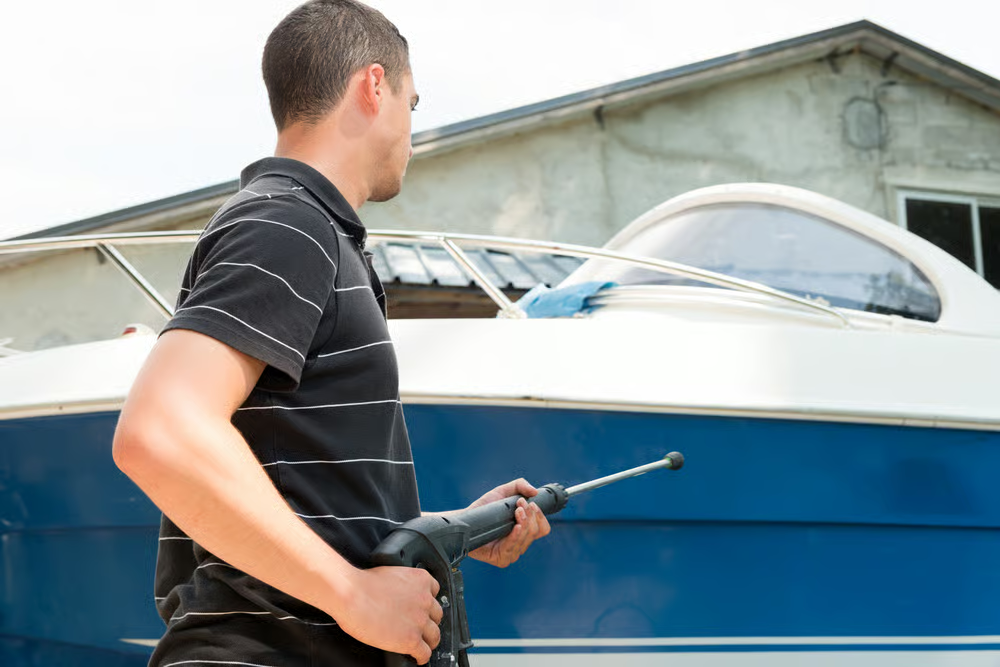
Boat Hull Restoration
Marine fiberglass repair covers everything from hairline stress cracks on the deck to structural hull damage and osmotic blister treatment. Water intrusion and UV exposure are the most common contributing factors to deterioration in marine applications.
Gel coat color matching on older hulls is difficult. Blistering treatment requires adequate drying time — we won't rush this process. Not all hull damage is repairable; badly saturated cores may require replacement of sections.
Process Overview
- Hull inspection and moisture readings
- Assessment of damage type and extent
- Grinding back damaged material
- Core drying if moisture is present
- Lamination with compatible resin/mat
- Fairing and gel coat finishing
- Barrier coat application if needed
Typical Use Cases
- Stress cracks and impact damage
- Osmotic blistering treatment
- Delamination of deck/hull sandwich
- Through-hull area repairs
- Keel joint cracks
- Gunwale and transom damage
Materials Used
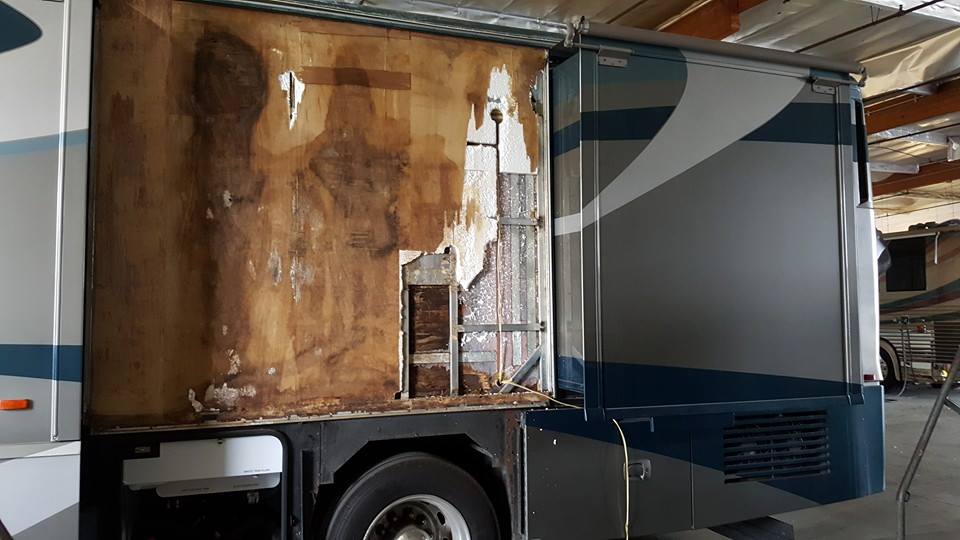
RV Fiberglass Repair
Modern RV sidewalls are typically composite construction — a fiberglass skin bonded to a foam or wood substrate. Delamination, impact damage, and water intrusion through failed seals are the most common issues we see in this category.
Extensive delamination across large sidewall sections may not be fully reversible. Color and texture matching on fiberglass-over-aluminum RV panels is difficult. Structural repairs near slideout openings require careful assessment before proceeding.
Process Overview
- Visual inspection of panel exterior
- Tap test and moisture check
- Identify delaminated sections
- Inject adhesive or open and re-bond
- Allow adequate cure time
- Surface repair and sealing
Typical Use Cases
- Sidewall delamination bubbles
- Impact cracks from road debris
- Corner cap damage
- Roof panel water damage
- Slide-out surround cracks
Materials Used
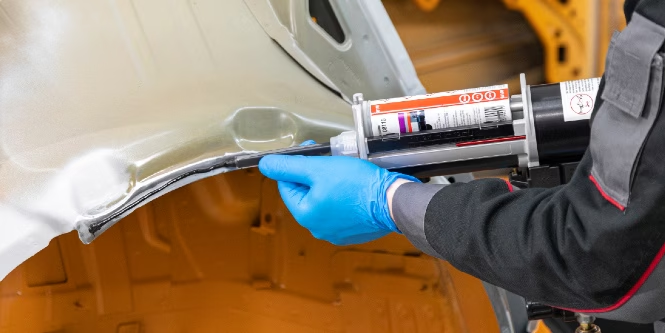
Automotive Panel Repair
Fiberglass body panels — spoilers, hoods, fenders, bumper covers, and custom body work — are repaired using techniques appropriate to the panel thickness and underlying structure. Finishing involves surface filling, priming, and paint preparation.
We bring fiberglass panels to a paint-ready state. Painting is typically handled separately by an automotive paint shop. Very thin or low-quality aftermarket panels can be more difficult to repair than OEM parts. Flex-additive and compatibility with existing coatings matters for long-term durability.
Process Overview
- Assess damage extent and flexibility
- Grind back to sound material
- Apply fiberglass mat and resin layers
- Sand and fair to shape
- Apply body filler if needed
- Prime for paint application
Typical Use Cases
- Cracked spoilers and ground effects
- Damaged fiberglass hoods
- Custom body panel repair
- Bumper cover structural repair
- Fender crack repair